Datalogz finds the duplicate datasets, unused reports, and runaway refreshes silently inflating your Power BI, Fabric, Tableau, and warehouse spend, then automates the cleanup.
Enterprise BI bills aren't getting bigger because companies are getting bigger. They're getting bigger because nobody is removing what stopped mattering two years ago.
Every BI environment we plug into is hitting the same wall.
A Fortune 500 consumer packaged goods enterprise we work with was spending six to seven million dollars a year on Power BI alone, spread across more than seventy premium and Fabric capacities. About ten of those capacities were under real load. The rest had been spun up for a project, a team, or a moment in time, and nobody ever turned them off.
The same source tables were being ingested into Power BI seventy or eighty times a day, by different teams, each thinking they owned the only copy. Their compute bill kept climbing. So did their bills with the warehouses underneath.
This isn't unique to them. It's what happens in every Power BI, Fabric, Tableau, or Sigma environment as it ages:
Most BI teams already know they have waste. What they don't have is a way to find it, quantify it, and remove it without breaking something the business depends on.
More than 20-25% of savings.FINANCE LEADER · FORTUNE 500 CPG · REACTING TO DATALOGZ'S MODEL AGAINST THEIR $6-7M ANNUAL POWER BI SPEND
Datalogz connects to your BI stack in under thirty minutes and instantly maps every asset, every report, dataset, semantic model, refresh schedule, and capacity, across Power BI, Fabric, Tableau, Sigma, Qlik, and beyond.
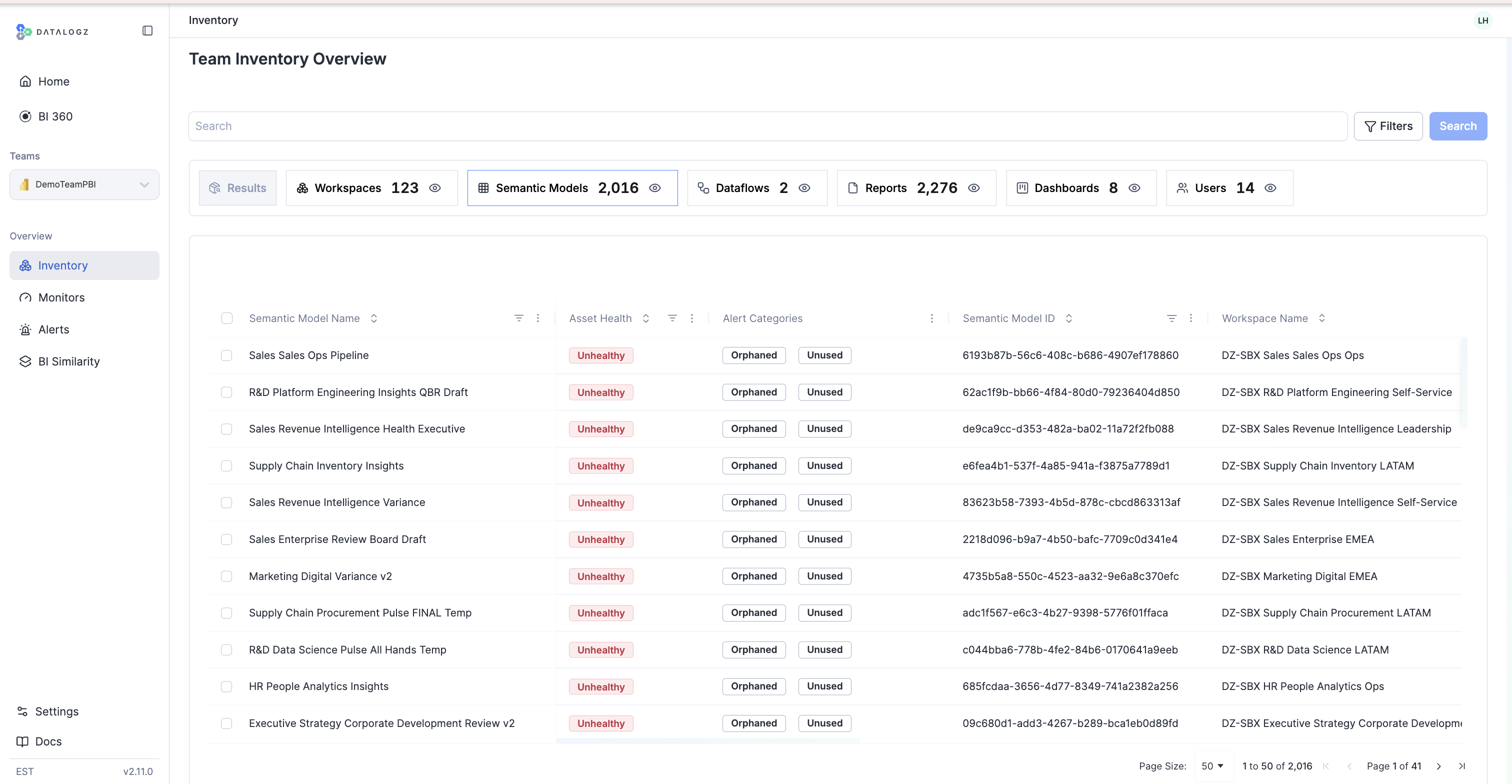
Reports and datasets that are still refreshing on schedule but haven't been opened in 60 days or more.
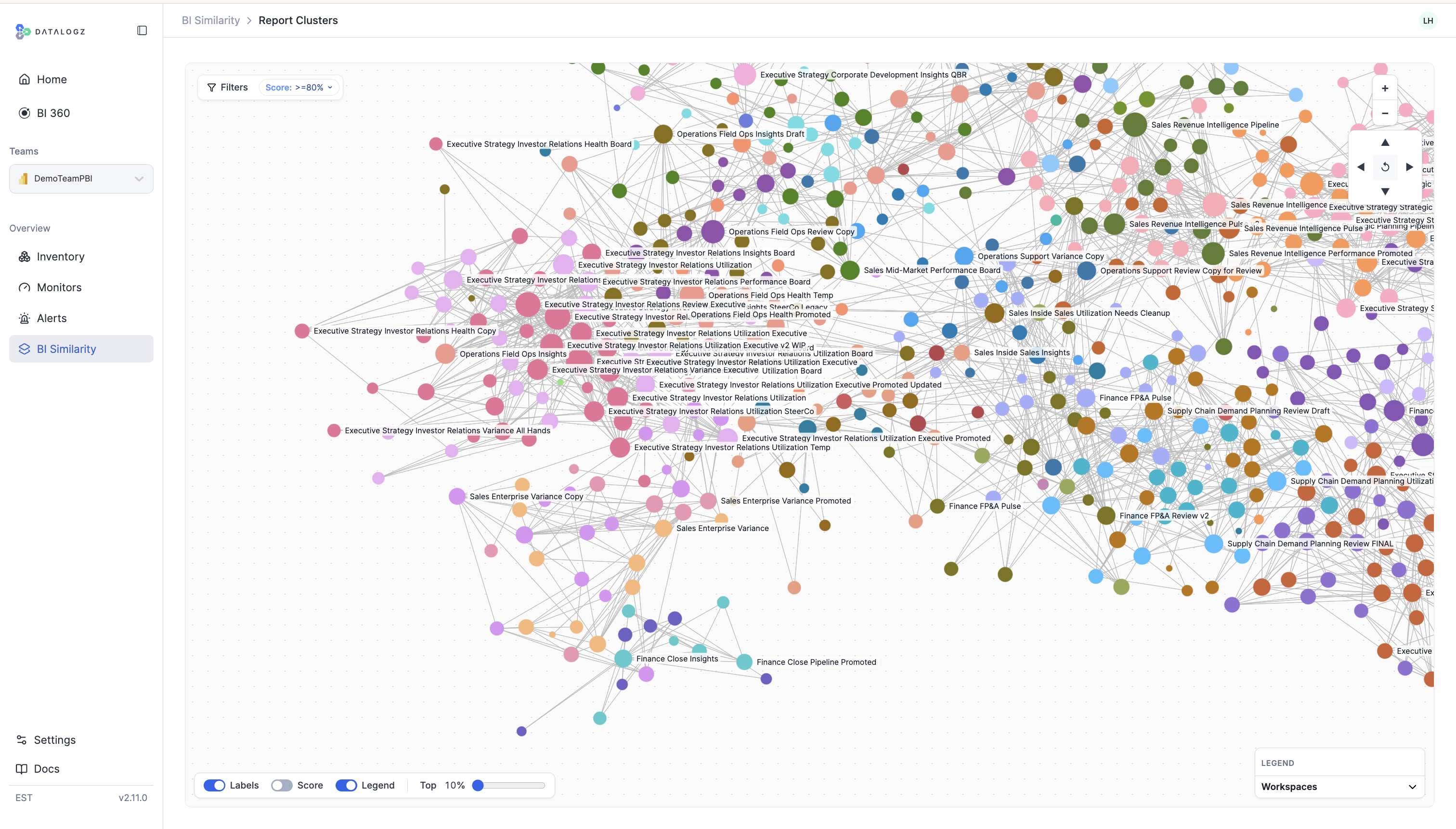
The same source data being recomputed multiple times across workspaces, with similarity scores so you know what's safe to consolidate.
What's burning your CUs, when, and why: the dataset taking 80 minutes to refresh before it fails.
Projected savings across Power BI compute, capacity rightsizing, and downstream warehouse spend, modeled against your actual contract.
Every action is tracked against the savings model, so finance sees realized value, not just projections.
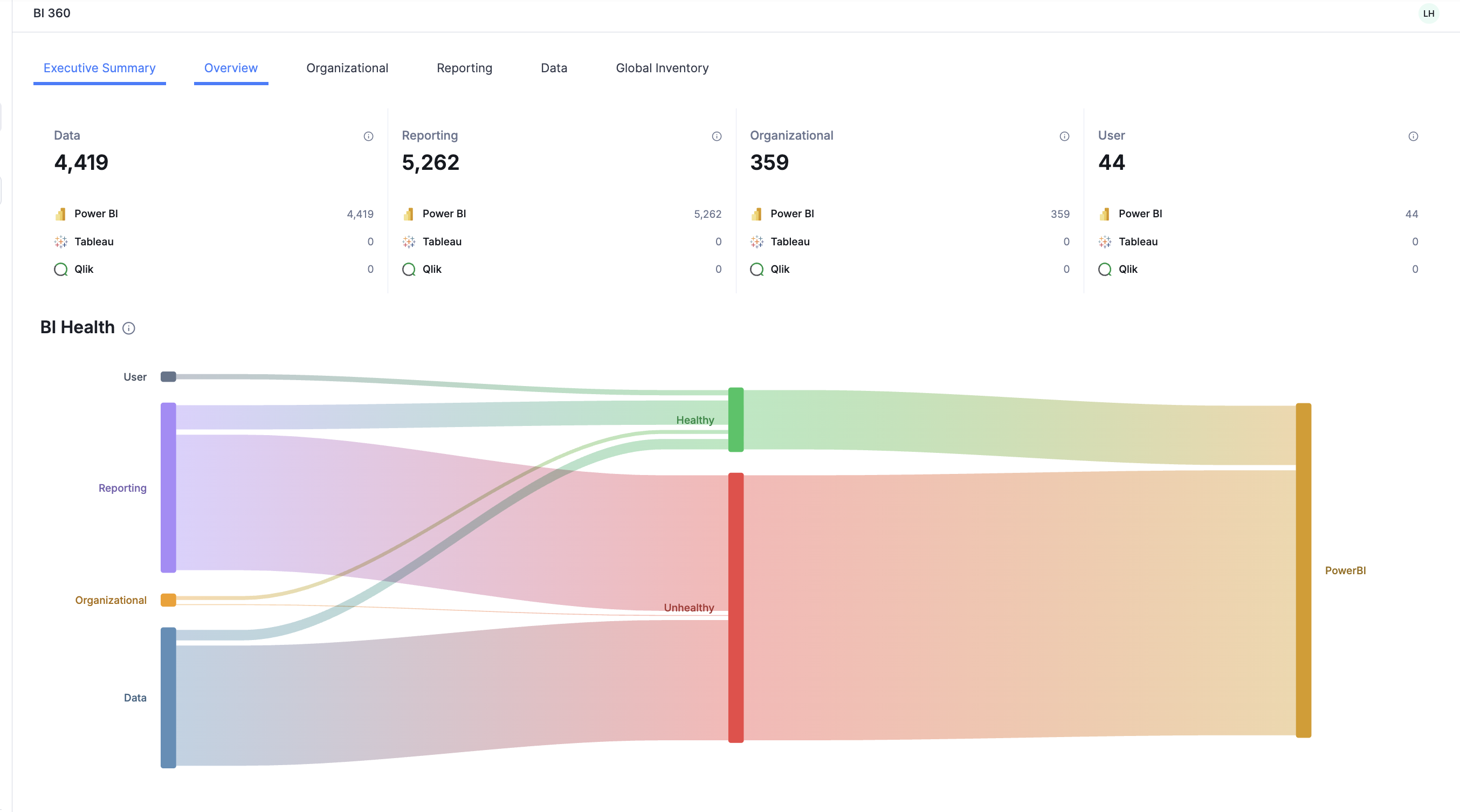
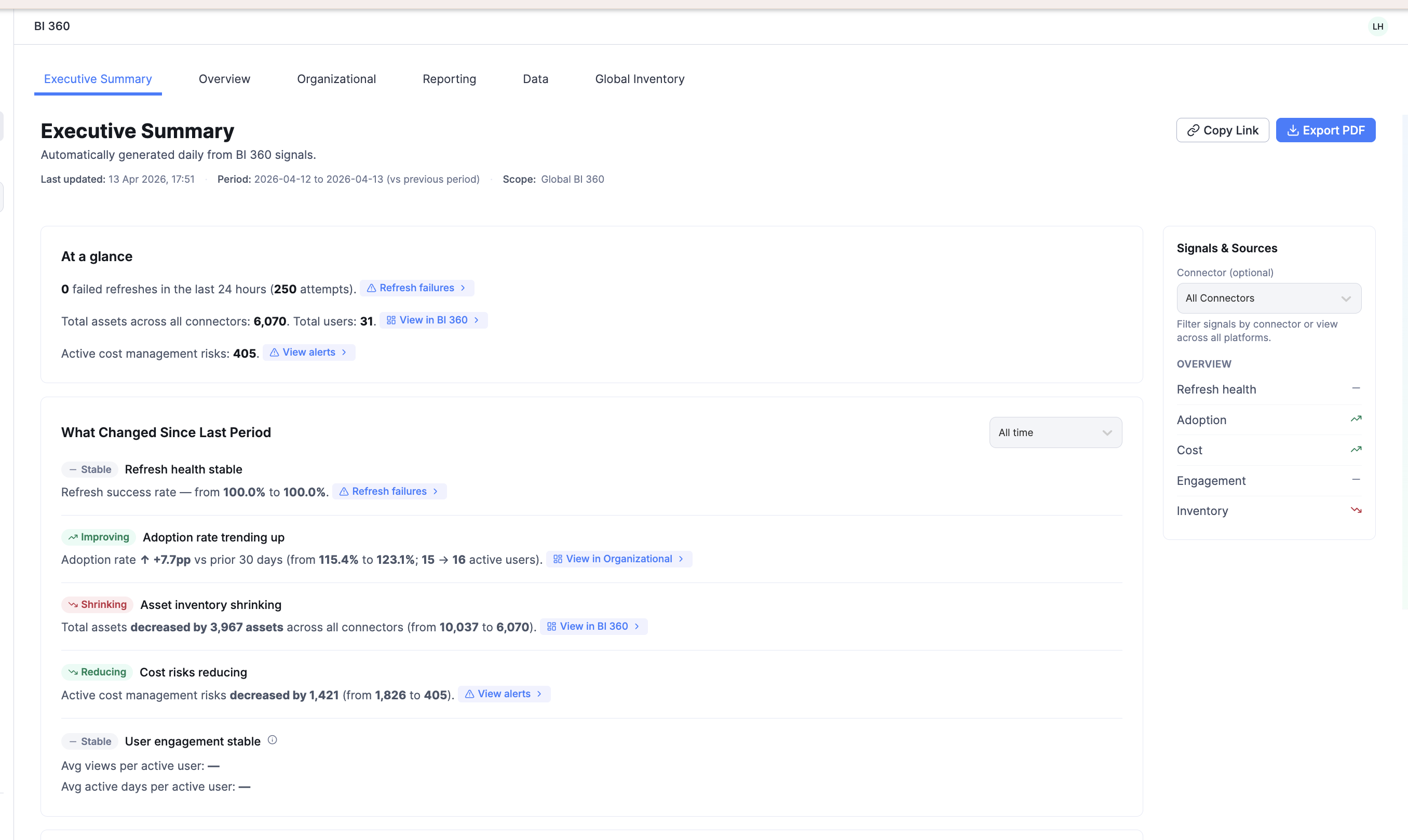
Four views your team will live in. From the executive summary that lands in the CDO's inbox, to the similarity graph that maps your duplicates at a glance.
The buyer was the finance partner sitting across from the BI platform owner. Datalogz scoped a proof of concept on just ten of those capacities. Here is what we surfaced in the first scan.
Every action Datalogz takes is auditable, reversible, and tied to a dollar figure on your contract.
Reduction in BI compute spend, modeled in the first scan and validated against your actual contract.
Of unused refreshes paused, without disrupting a single piece of active reporting your business depends on.
Capacities consolidated and retired. Dollars off your invoice, not just compute headroom on a dashboard.
A live view of realized vs. projected savings every month, for finance, for the CDO, for the renewal conversation.
30-minute read-only connection. ROI modeled on the first call. No procurement gauntlet.